How Truth, Goodness, and Beauty Can Usher in ‘Healing Remembrance’
Below is a version of an essay I wrote for my intro to theology class. We are studying the transcendentals (truth, goodness, and beauty) in light of the earth, the body, and movement. This essay was for the Earth unit.
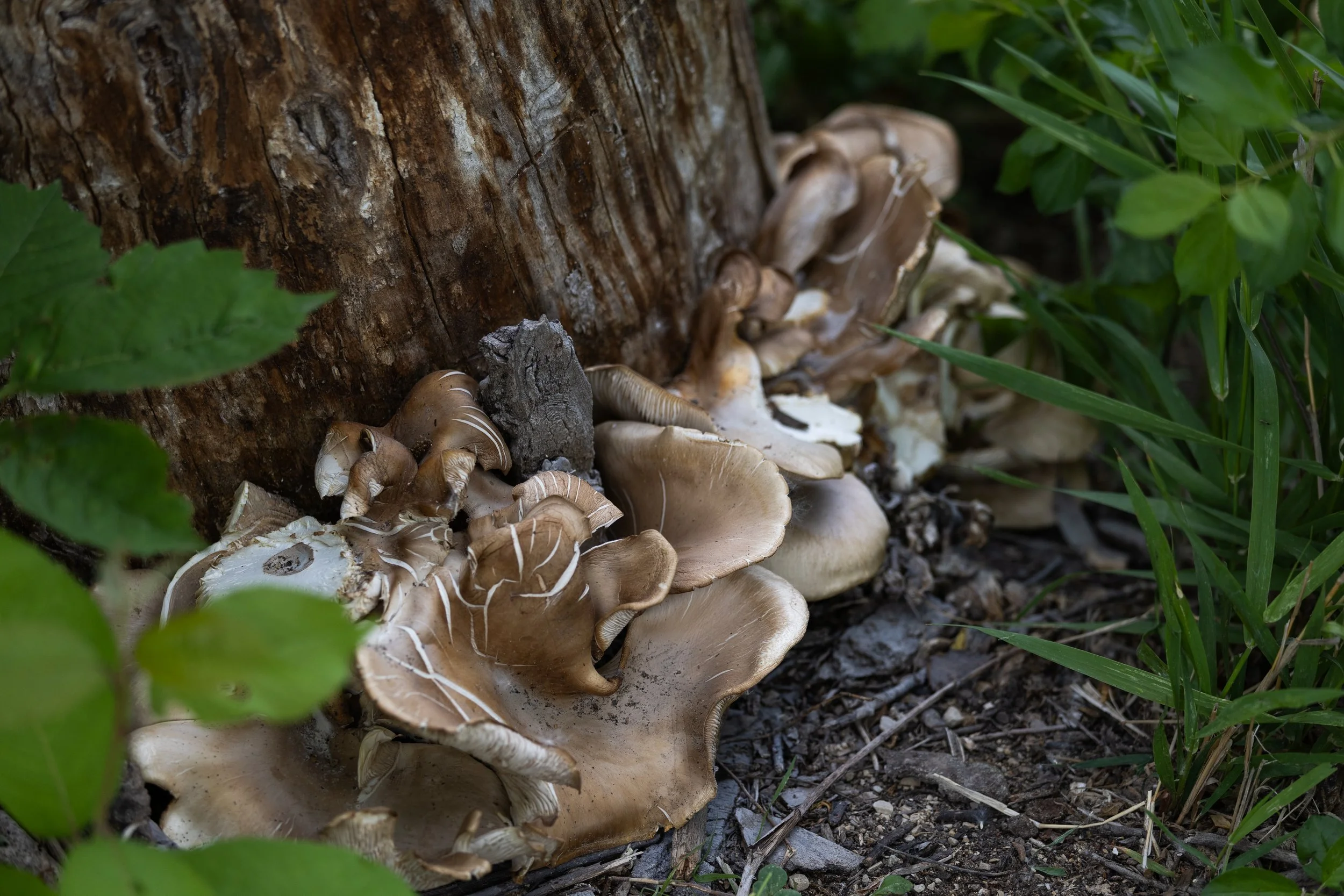
“In our power over nature, and in our radical unremembering of the fact that we are a part of nature, we feel that we can abuse nature…But in truth, we are of the essence of the ebb and flow of the heartbeat of nature, so that we cannot do violence to nature without there being an echo of agony moving through all the corridors of the spirit.”
– Howard Thurman
The earth is in agony, and with it, her people. One doesn’t have to look very hard – or very far – to see the effects of climate change on our natural environment and in health inequities experienced across the globe. In “Reimagining Eschatology: Toward Healing and Hope for a World at the Eschatos,” Barbara R. Rossing reminds us that the effects of climate change will continue to become more devastating, “Whether from vector-borne pests such as Zika and chikungunya, from cholera-contaminated water from floods, from heat stroke, or from drought-caused hunger.” And this devastation is happening disproportionately in what Matthew Elia calls “sacrifice zones,” areas hardest-hit by climate change because society has deemed the lives of those who live there, often those with intersecting identities, as less-than.
Racism, he says, “Arranges social order by group-differentiated determination of who is likely to die early, how that vulnerability to death will be used profitably, and which group will reap such profits. Racism attempts to install, stabilize, and normalize a border between the sacrificed and the beneficiaries of their loss.” This all-too poignantly calls to mind the words of Grace Ji-Jun Kim and Susan M. Shaw in “Introduction to Intersectionality.” “The better question is not what is intersectionality, but what does it do?” Of course, they were referencing the problem-solving nature of intersectional analysis, but one can’t help but see a parallel to what happens to those with intersecting identities when the intersectionality of institutions and systems of power create hierarchies of oppression.
If this individual and collective suffering is in part due to what Howard Thurman called a radical unremembering, could there be something powerful in reclaiming the memory that we are part of nature, and as such, we are part of each other? What has led to this unremembering, and can remembrance usher in healing? This essay attempts to address these questions by examining ecojustice through the lens of intersectionality and tracing our individual and collective unremembering to commonly understood definitions of sin and salvation. Finally, it asks if we can reclaim these concepts by embracing the transcendentals (truth, goodness, and beauty) – particularly beauty – to find a measure of healing remembrance for ourselves and for the earth.
In many Christian traditions, sin is understood as immorality – a breaking of rules that have been declared in the Bible, such as the Ten Commandments: “Thou shalt not…” Some have pointed to the Hebrew word for sin translates simply to “missing the mark.” Sin, therefore, becomes anything we do that misses the mark and separates us from God. If one has read John Thatamanil’s “How Not to Be a Religion: Genealogy, Identity, and Wonder,” they could argue that while he doesn’t draw a direct connection to ecojustice, there is a certain religionization at play in this understanding of sin that has dampened ontological wonder and led to harm for the earth and her people. One could argue that such religionization – particularly literalization and fetishization – has contributed to our current state by hyperfixating on a list of rules and an imagined promise of a future heaven. In this hyperfixation, the bigger picture – and a connection to earth herself – has been lost.
In her talk on ecowomanist interconnections and activism, “Social Justice is Earth Justice,” Melanie Harris reminds us of womanist theologian Delores S. Williams’ words that sin is anything that is not life-giving. In a sense, the classic understanding of sin as transgressions that separate humans from God makes sense if we expand our understanding of God to include the earth and natural beauty. What if sin is separation from God insofar as it is a disconnection from beauty?
In “Saving Beauty,” Kathryn B. Alexander argues that no current understanding of sin is complete without consideration of the loss of natural beauty and that the existence of communities that embrace beauty, art, relationship, and justice widens the understanding of sin to include the human capability to destroy beauty. If sin includes, or even simply is, a disconnection from beauty, can beauty itself bring salvation, or in other words, healing? The same Christian traditions that have hyperfixated on a certain understanding of sin have understood salvation through a similarly religionized and perhaps over-simplified dualistic lens: Jesus died on the cross to save us from our sins. End of story. But we see in “Saving Paradise” by Rita Nakshima Brock and Rebecca Ann Parker that the story doesn’t end there.
“The death of Jesus, it seemed, was not a key to meaning, not an image of devotion, not a ritual symbol of faith for the Christians who worshipped among the churches’ glittering mosaics. The Christ they saw was the incarnate, risen Christ, the child of baptism, the healer of the sick, the teacher of his friends, and the one who defeated death and transfigured the world with the Spirit of life.”
Alexander again connects beauty and healing.“If Fyodor Dostoevsky was right that beauty will save the world, then speaking of beauty, particularly the beauty in the natural world, is now a necessity. Further, an examination of the experience of natural beauty has the potential to illumine the environmental crisis as a spiritual crisis.” But how do we embrace and practice this saving beauty?
In his talk, “Why do you say, ‘be yourself, be beautiful?’” Zen Master and activist Thich Nhat Hanh paints a picture of how keeping a connection with nature is the key to practicing the saving beauty Alexander describes. “For Mother Earth, non-discrimination is the way she looks,” he said. And if we can stay connected to her, we can also see the world in this way.
Could it be this simple? Hanh concludes that if we a) recognize that we are children of Mother Earth and b) develop in ourselves Mother Earth’s mind of non-discrimination, we can see that “Everything is a wonder. Everything is beautiful. Not only the lotus is beautiful. The mud also is beautiful.” In this way, beauty becomes an invitation to salvation – an invitation to healing. In “Saving Beauty,” Alexander quotes ecofeminist theologian Ivone Gebara: “If justice is fundamentally about creating right relationships, beauty is in many ways the incarnation and measure of those relationships. It is a kind of aesthetic love, an invitation to nurture the creativity and integrity of every created thing. It is an invitation to salvation.”
But to accept this invitation, we must remember – and to do that, we must pay attention. As Alexandar reminds us, “We cannot love that which we do not know.” With that, let us revisit Thurman’s words.
“In our power over nature, and in our radical unremembering of the fact that we are a part of nature, we feel that we can abuse nature…But in truth, we are of the essence of the ebb and flow of the heartbeat of nature, so that we cannot do violence to nature without there being an echo of agony moving through all the corridors of the spirit.”
As we have seen, the transcendentals themselves (truth, goodness, beauty), or rather the embracing of them, specifically beauty, are essential to accepting this invitation to salvation.
I conclude, then, by revisiting how applying an intersectional framework to all of the ideas seen here is essential to what I call “healing remembrance,” an answer, of sorts, to Thurman’s idea of radical unremembering. Healing remembrance is reclaiming our memory that we are part of Mother Nature – we are in her and she is in us – and therefore, we are all connected to each other.
This stance, or framework, then propels us to be agents of healing in this world. Among the words of Alexander, Kim and Shaw, and Thich Nhat Hanh, I see three ways we can become agents of healing remembrance: Decentering ourselves and developing a loving eye, paying attention, and reclaiming story. Decentering ourselves and developing a loving eye is done in tandem with paying attention. In her poem “Praying,” Mary Oliver reminds us what we make space for when we practice this loving attention:
“It doesn’t have to be
the blue iris, it could be
weeds in the vacant lot, or a few
small stones; then patch
a few words together and don’t try
to make them elaborate, this isn’t
a contest but the doorway
into thanks, and a silence in which
another voice may speak.
Finally, intersectionality allows us to reclaim story and memory because it “Creates space to create the stories to which we should have had access, and so to a great degree intersectional thinking relies on the re-membered imaginations of poets and novelists as well as sociologists and theologians.” While Kim and Shaw focus here on the poets, novelists, theologians, etc., one could argue that all are welcome to this re-imagination and re-membering. As Kim and Shaw say, “Story is a starting place.”
Paying loving attention and embracing story also allows us to engage directly with what Panu Pihkala calls “wounded places” in “Eco-Anxiety and Pastoral Care.” By engaging with these wounded places in a “full-bodied way,” we can not only embrace ecological grief but reimagination, or as Pihkala says, the possibility of “radical joy.” Healing remembrance. Let us end with Thich Nhat Hanh’s Four Pebbles Meditation to reconnect us to the earth and center us in a practice of healing remembrance.
Breathing in, I see myself as a flower.
Breathing out, I feel fresh.
Breathing in, I see myself as a mountain.
Breathing out, I feel solid.
Breathing in, I see myself as still water.
Breathing out, I reflect things as they are.
Breathing in, I see myself as space.
Breathing out, I feel free.
Sources
Alexander, Kathryn B. “A Theological Aesthetics of Nature.” In Saving Beauty: A Theological Aesthetics of Nature, 119–44. Augsburg Fortress, 2014. https://doi.org/10.2307/j.ctt9m0vpq.7.
Brock, Rita Nakashima, and Rebecca Ann Parker. Saving Paradise : How Christianity Traded Love of This World for Crucifixion and Empire. Boston: Beacon Press, 2008. http://site.ebrary.com/id/10256089.
Clark, E. Trey, “The Living Tradition of Black Contemplative Preaching,” In Oneing Volume 13 No. 2. 27-33. CAC Publishing, 2025.
Elia, Matthew. Climate apartheid, race, and the future of Solidarity: Three frameworks of response (anthropocene, Mestizaje, CIMARRONAJE) - elia - 2023 - journal of religious ethics - wiley online library, 2023. https://onlinelibrary.wiley.com/doi/full/10.1111/jore.12464.
Hanh, Thich Nhat. “Why do you say ‘Be Yourself Be Beautiful’?” YouTube, January 17, 2015, educational video.
Harris, Melanie. “Social Justice is Earth Justice: Ecowomanist Interconnections & Activism | Dr. Melanie Harris,” YouTube, October 13, 2021, educational video.
Kim, Grace Ji-Sun, and Susan M. Shaw. Intersectional Theology : An Introductory Guide. Baltimore, Maryland, Minneapolis [Minnesota]: Project Muse, Fortress Press, 2018. https://muse.jhu.edu/book/61583/.
Oliver, Mary. Devotions: The Selected Poems of Mary Oliver. New York: Penguin Press, an imprint of Penguin Random House LLC, 2017.
Pihkala, Panu, “Eco-Anxiety and Pastoral Care: Theoretical Considerations and Practical Suggestions” in Practical Theology amid Environmental Crises, McCarroll, Pamela, and HyeRan Kim-Cragg, eds. Switzerland: MDPI - Multidisciplinary Digital Publishing Institute, 2023.
Rissho, Kosei-kai, and Gene Reeves. “Seeing Beauty in Everyday Life According to the Lotus Sutra.” In Finding Beauty in the Other: Theological Reflections Across Religious Traditions, 295-301. Crossroad Publishing, 2015. https://unitedseminary.instructure.com/courses/1689/files/81647?module_item_id=39070.
Rossing, Barbara R. “Reimagining Eschatology: Toward Healing and Hope for a World at the Eschatos.” In Planetary Solidarity: Global Women’s Voices on Christian Doctrine and Climate Justice, edited by Grace Ji-Sun Kim and Hilda P. Koster, 325–48. Augsburg Fortress, 2017. https://doi.org/10.2307/j.ctt1pwt42b.24.
Thatamanil, John.“How Not to Be a Religion: Genealogy, Identity, Wonder.” In Common Goods: Economy, Ecology, and Political Theology, edited by MELANIE JOHNSON-DeBAUFRE, CATHERINE KELLER, and ELIAS ORTEGA-APONTE, 54–72. Fordham University Press, 2015. https://doi.org/10.2307/j.ctt17t74qs.5.