The salvific power of seeing
Below is a version of an essay I wrote for my theology class. We are studying the transcendentals (truth, goodness, and beauty) in light of the earth, the body, and movement. This essay was for the embodiment unit.
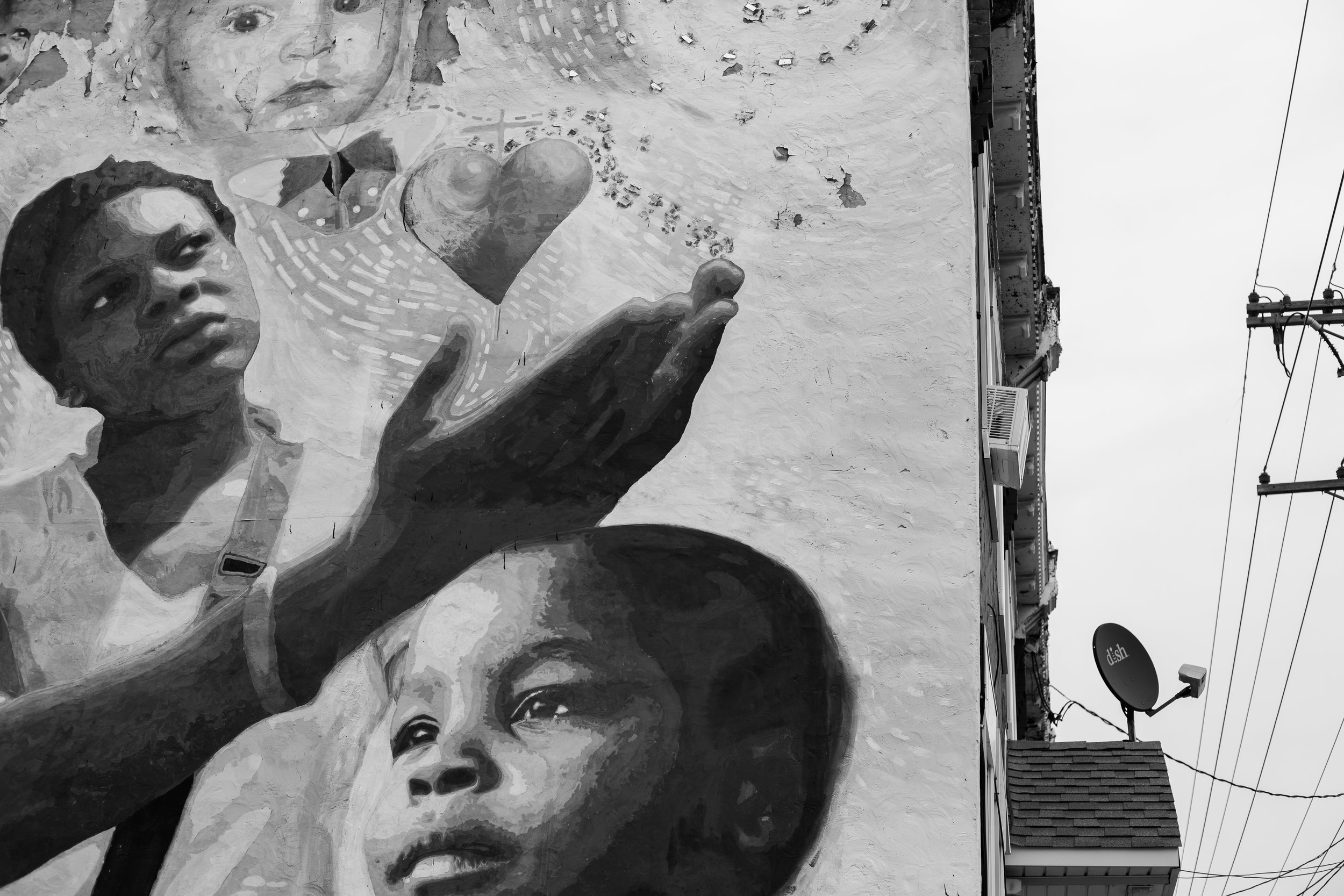
“One of the deepest longings of the human soul is to be seen.”
– John O’Donohue
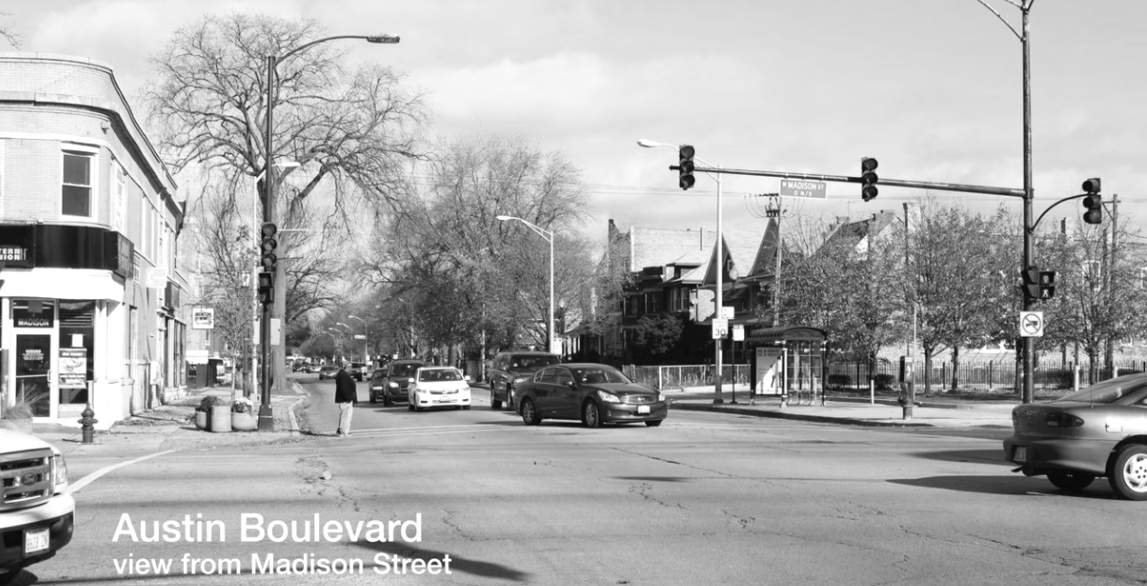
Twelve years ago, I was a graduate student in journalism, spending all my time reporting for a hyperlocal online newspaper in the Austin neighborhood on Chicago’s West Side. There was a street named Austin Boulevard that literally divided one of the most disinvested (or to use Howard Thurman’s terminology, disinherited) neighborhoods in Chicago from one of Chicago’s most affluent suburbs, Oak Park, Illinois. My graduate thesis was a long-form journalistic piece on why and how this dividing line came to be. I talked to residents, politicians, historians, and business owners – one of whom quoted W.E.B. Du Bois’ well-known words that the problem of the twentieth century is the problem of the color line. “Austin Boulevard,” he said, “is a physical representation of this color line.”
And it’s not the only one. There are as many “Austin Boulevards” as there are cities cut in half by freeways and neighborhoods marked by redlining. St. Louis has the Delmar Divide. Detroit has Eight Mile Road. The list goes on and on. The history of Chicago’s “color line” dates back further than the Civil Rights era – at least to the 1800s, when Austin, then a well-to-do suburb, was annexed by Chicago only to face near-immediate disinvestment.
In Stand Your Ground: Black Bodies and the Justice of God, Kelly Brown Douglas traces the history of such systemic racism back much further than I did as a student in Chicago. She traces it to 98 C.E., when Tacitus published Germania, a book that went on to influence the Grand Narrative of American Exceptionalism. Theologically speaking, this is sin: systems built and fostered over centuries that thrive on denying life to others. In this paper, I pick up where I left off in my first essay, exploring the Christian concepts of sin and salvation through a Social Justice Education (SJE) Framework.
In that paper, I spoke of Melanie Harris’ reminder of womanist theologian Delores S. Williams’ words that sin is anything that is not life-giving. I applied that to sin as separation from God insofar as it is a disconnection from – and a harming of – natural beauty. This thread comes through in this unit on the body, especially when we consider that we are also part of nature. And, to add another layer, Douglas states that “sin is that which alienates humans from the very ways and will of God.” What, then, are the ways and will of God?
God, she says, is freedom. Love. Life. So God’s ways and God’s will are ways of freedom, love, and life. Seen from this view, the Matrix of Oppression shows compounding layers of sin: Individual, institutional, and societal against what Douglas calls the crucified class, which consists of people who are demonized and defy the status quo. In other words, the crucified class are those who have been systematically oppressed and intentionally unseen, that is, not seen as image bearers. In Spirit and the Obligation of Social Flesh, Sharon V. Betcher says that to inhabit a city, specifically in the West, we adopt – we learn – ways of “unseeing.” The consequences of such unseeing are more than indifference. They create and foster a continued cycle of systemic suffering for the “targeted” – or crucified – class. She is speaking specifically of pain when she says its one limit is solidarity with others, but I think this applies to anyone belonging to a targeted class, from Black communities to people with disabilities to those in poverty, and those for whom these identities intersect.
In Enfleshing Freedom: Body, Race, and Being, M. Shawn Copeland talks about Black invisibility. Quoting philosopher Lewis Gordon, she says, “The body is our perspective in the world. This perspective has at least three dimensions – the dimension of seeing, the dimension of being seen, and the dimension of being conscious of being seen by others.” In a white supremacist society, blackness itself is made to be invisible because it is seen as a “defilement.”
So, seeing people and unseeing people doesn’t just happen. It takes intentionality and work. As Copeland says, “Beauty is in the eye of the beholder; but the eye must be tutored to see, coached to attribute meaning to line and curve.” Instead, what is often seen are “preconceived patterns or stereotypes of Black body, life, and being – promiscuous, loud, illiterate, diseased.” What happens when we truly see? Douglas paints the tragic picture of what happens when we choose not to – not only in the murder of Trayvon Martin, but in the aftermath. Specifically, she tells the story of Trayvon’s parents speaking to Matt Lauer of the Today Show. “Notably missing,” she says, “was the typical question that the Today Show hosts ask parents who have lost a child to a senseless act: Is there anything you want us to know about your child?” He didn’t – wouldn’t – see. As Marcella Althaus-Reid says in Indecent Theology, “One does not see what one does not want to see.”
As seeing is not just done with the eyes, but takes all the senses and the soul, it occurs to me that sometimes seeing people means to not see them. I’ll explain. Betcher raises the issue of how we, as a society, see (or don’t see) Camden, New Jersey, then known as the second most dangerous city in America. “Camden is where those discarded as human refuse are dumped.” A few years ago, I was sent to Camden on an assignment for my corporate communications job: Tell the story of the health equity efforts the organization was making in Camden. Flipping the script from taking what we do in the West to the so-called Global South, this organization was bringing lessons learned in Kenya, Ghana, and Bangladesh to cities in the United States – starting with Camden. And the community health workers were determined that this story would be told with dignity and that the patients (rightly so) would not be exploited, used to demonstrate the poverty of the city, or blamed for what systems had wrought. Seeing Camden, therefore, meant not “seeing.”
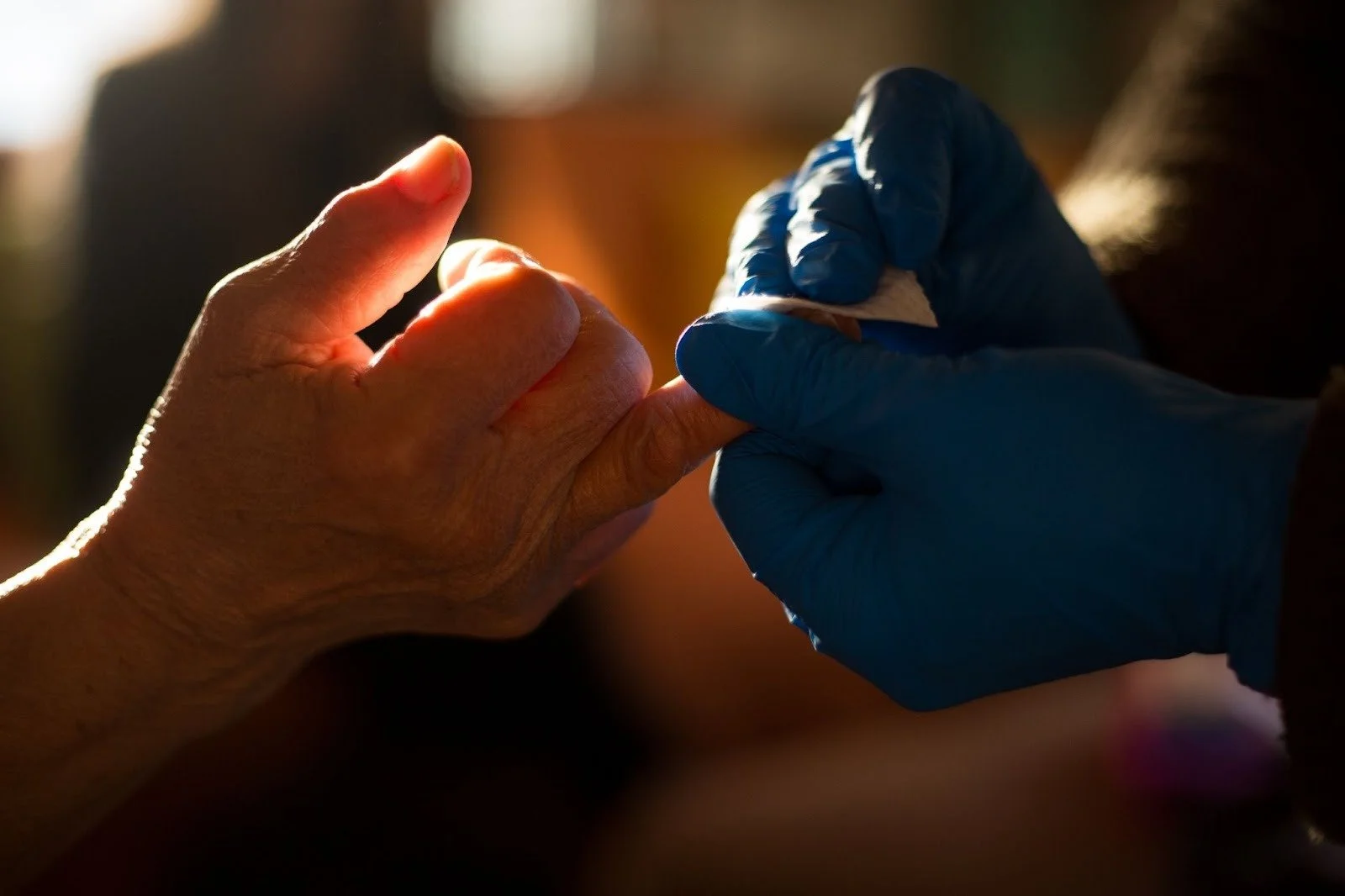
Seeing the residents of Camden in imago dei meant listening to and hearing what these sacred gatekeepers were saying. I created a photo essay that showed not a single face. Is this small act of seeing in some way solidarity with the crucified class? I think maybe. Because in order to enter into solidarity with the crucified class and then to remain there, you must first see them. This is the salvific power of seeing.
For Douglas, salvation is not a “heavenly” reward. There is no substitutionary atonement at play. “Rather,” she says, referencing the story of the Samaritan woman, “It is a restoration (emphasis mine) of the woman to her value and worth as a child of God. Again, Jesus frees her from the social-religious constructs that deemed her an offense, and restores her sacred identity.”
Salvation is freedom from a culture (Matrix of Oppression)that “exacts death upon Black bodies.” Salvation is justice. Salvation is solidarity with the crucified class. And it starts with seeing. Jesus saw people, and it is how he could stand in solidarity with them.
“The context through which God enters human history is revelatory. It matters that Jesus died on the cross, just as it matters that God freed the Israelites from bondage. For it is only when the least of these are free to achieve the fullness of life that God’s justice will be realized. The profound meaning of God’s preferential option for freedom is seen in God’s solidarity with the crucified class.”
I recently raised the idea of “healing remembrance” as an answer, of sorts, to Howard Thurman’s “radical unremembering.” I believe his words also hold meaning when we look at the transcendentals in light of the body and the social flesh.
“In our power over nature, and in our radical unremembering (emphasis mine) of the fact that we are a part of nature, we feel that we can abuse nature…But in truth, we are of the essence of the ebb and flow of the heartbeat of nature, so that we cannot do violence to nature without there being an echo of agony moving through all the corridors of the spirit.”
Jesus’ words during the Last Supper, “Do this in remembrance of me,” are about more than recollection, Douglas says. “The Greek for the word ‘remembrance’ in this instruction is ‘anamnesis.’ This word means more than simply a mental recollection of past events. It means to bring the past into the present (emphasis mine).” She goes on to say that this means being in the world as Jesus was – seeing who and how he sees – entering into solidarity with the crucified class.
The salvific power of seeing is that it not only leads to justice, but it is, in and of itself, a form of resistance. Melissa Raphael speaks to this idea in The Female Face of God in Auschwitz with the Jewish obligation of hesed, which is not only kindness but gracious love. “Hesed was a way of seeing and recreating a woman’s full humanity. As such, it was an act of resistance: a faithfulness to the image of God in her suffering face and a judgement on the gross inhumanity that sought to make any person less than human. Hesed present-ed God by holding up the image of God in the restored image of the human.”
By a rough count, the word “see” or “seeing” appeared in our readings this unit at least 32 times. And that’s not to mention the concept of image. While other themes also arose, I found the connection between the act of seeing and truth, goodness, and beauty as it relates to the body as inseparable. For Raphael, “The face-to-face confrontation is a fundamentally ethical moment revealing the holiness of the face as that which must not be harmed. The face issues a call to justice.”
Perhaps I was drawn to this connection because my spiritual direction practice is rooted in the belief that, as John O’Donohue says in Anam Cara: A Book of Celtic Wisdom, “One of the deepest longings of the human soul is to be seen.” Reflecting on this quote through the framework of the Matrix of Oppression begs the question: What does fulfillment of that longing do beyond the individual? Could it also be said that one of the deepest longings of the collective – of the social flesh – is to be seen, and in that seeing, find the salvation of solidarity, belonging, and justice? The body is, after all, as Copeland states, a “site of divine revelation and, thus, a basic human sacrament.” I believe it calls each of us to the act of sacred seeing.
Sources
Althaus-Reid, Marcella. Indecent Theology : Theological Perversions in Sex, Gender and Politics. London: Routledge, 2000. http://www.dawsonera.com/depp/reader/protected/external/AbstractView/S9780203468951.
Betcher, Sharon V. Spirit and the Obligation of Social Flesh : A Secular Theology for the Global City. 1st ed. New York: Fordham University Press, 2014. https://doi.org/10.1515/9780823253937.
Clark, E. Trey, The Living Tradition of Black Contemplative Preaching, In Oneing Volume 13 No. 2. 27-33. CAC Publishing, 2025.
Copeland, M. Shawn. Enfleshing Freedom : Body, Race, and Being. Second edition. Minneapolis: Fortress Press, 2023. https://www.jstor.org/stable/10.2307/j.ctv11cvz9w.
Douglas, Kelly Brown. Stand Your Ground : Black Bodies and the Justice of God. Maryknoll, New York: Orbis Books, 2015. http://search.ebscohost.com/login.aspx?direct=true&scope=site&db=nlebk&db=nlabk&AN=1901226.
Harris, Melanie. Social Justice is Earth Justice: Ecowomanist Interconnections & Activism | Dr. Melanie Harris, YouTube, October 13, 2021, educational video,
Kather, Katie. “‘The Invisible Barbed Wire:’ How History Divided Oak Park and Austin” Creatavist. December 3, 2013. https://katiekather.creatavist.com/story/6737 (defunct)
Kather, Katie. “Austin Boulevard: The Invisible Barbed Wire” Vimeo, December 2013, educational video,
Kather, Katie. “At Home on Chicago’s West Side” Vimeo, December 2013, educational video,
Mercedes, Anna. “Common Good and Social Justice.” Lecture, United Theological Seminary of the Twin Cities, St. Paul, Minnesota, September 2025.
O’Donohue, John. Anam Cara. New York: Bantam, 1999.
Raphael, Melissa. The Female Face of God in Auschwitz : A Jewish Feminist Theology of the Holocaust. London: Routledge, 2003. https://search.ebscohost.com/login.aspx?direct=true&scope=site&db=nlebk&db=nlabk&AN=94866.
Rivera, Mayra. Poetics of the Flesh. Durham: Duke University Press, 2015. https://doi.org/10.1515/9780822374930.